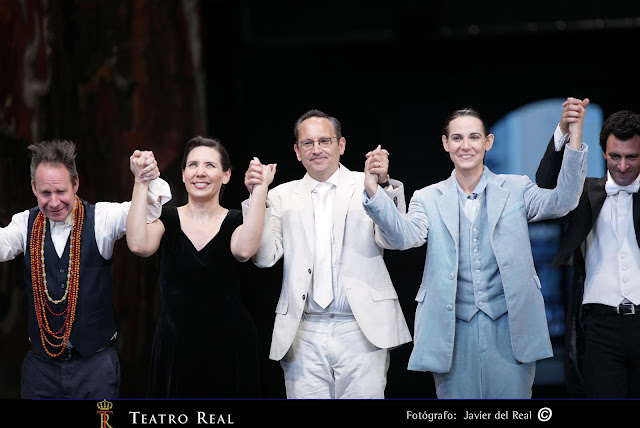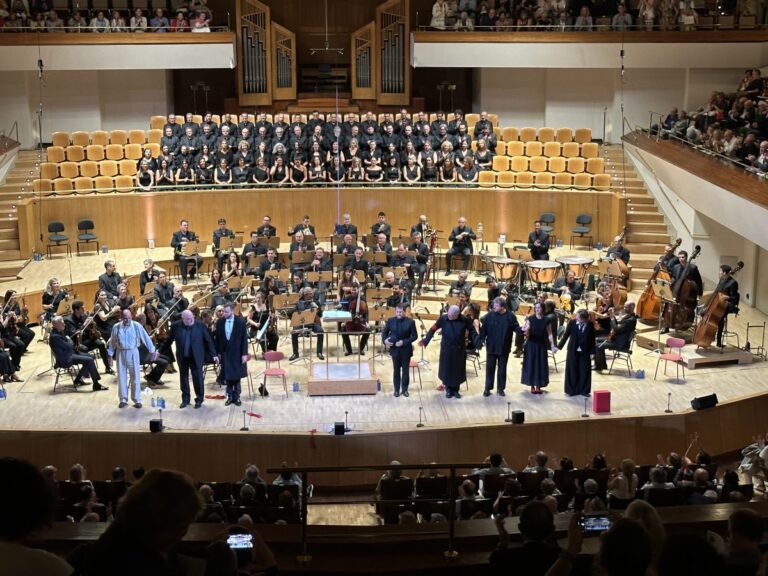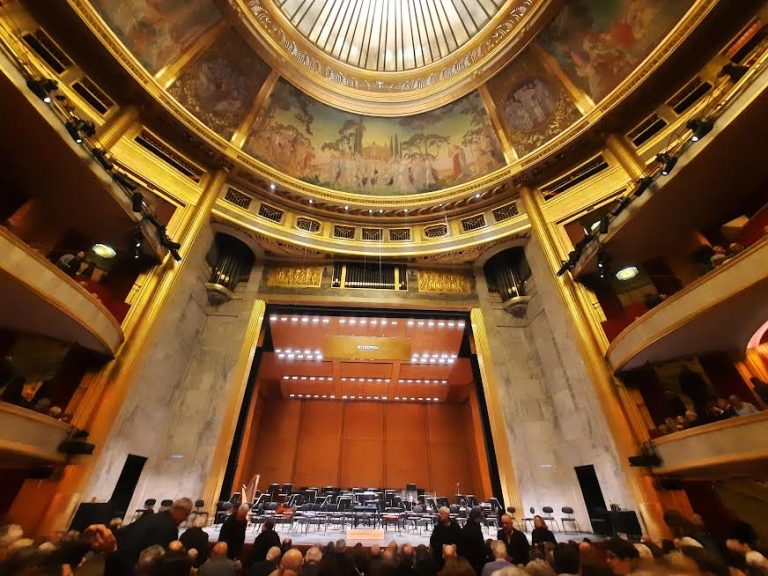
OSVALDO GOLIJOV PRESENTA SU ÓPERA AINADAMAR EN EL MET OPERA (NEW YORK), ESTRENADA EN 2012, EN EL MADRILEÑO TEATRO REAL (LEAN ABAJO LA ENTREVISTA QUE LE HICIMOS EN ESA OCASIÓN)
MET OPERA HOUSE. NEW PRODUCTION. Oct 15 – Nov 9
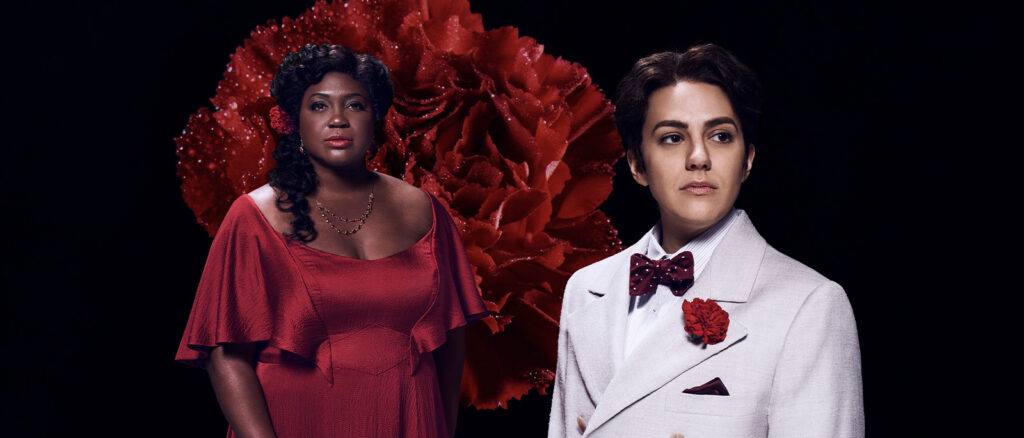
Argentinian composer Osvaldo Golijov’s Grammy Award–winning first opera dramatizes the life and work of poet-playwright Federico García Lorca, who was assassinated by Fascist forces at the start of the Spanish Civil War for his socialist politics and homosexuality.
His story emerges through the memories of Catalan actress Margarita Xirgu, Lorca’s muse—sopranos Angel Blue and Gabriella Reyes—who reminisces to her student Nuria, portrayed by soprano Elena Villalón. Lorca himself makes a dreamlike appearance, sung as a trouser role by mezzo-soprano Daniela Mack, and flamenco singer Alfredo Tejada completes the principal cast as the Falangist politician Ramón Ruiz Alonso, who arranged Lorca’s execution.
Combining features of both an opera and a passion, Ainadamar, conducted by Miguel Harth-Bedoya in his Met debut, crackles with the energy and rhythms of flamenco and rumba, as well as the violent backdrop of civil war, all of which springs forth on the Met stage in a vivid company-debut production by Brazilian director and choreographer Deborah Colker, renowned for her work with Cirque du Soleil.
This production uses gunshot, strobe-light, and haze effects.
Music by Osvaldo Golijov
Libretto by David Henry Hwang
Ainadamar is part of the Neubauer Family Foundation New Works Initiative
A co-production of the Metropolitan Opera, Opera Ventures, Scottish Opera, Detroit Opera, and Welsh National Opera
FIRST IMAGE: MARIANA
Teatro Solís, Montevideo, Uruguay, April 1969. The voices of little girls sing the opening ballad of Lorca’s play Mariana Pineda. The actress Margarita Xirgu looks back across 40 years since she gave the premiere of this daring play by a brilliant young author. In the last minutes of her life, she tries to convey to her brilliant young student Nuria the fire, the passion, and the hope of her generation that gave birth to the Spanish Republic. She flashes back to her first meeting with Lorca in a bar in Madrid.
Lorca tells her that the freedom in his play is not only political freedom and sings a rhapsodic aria that opens the world of imagination, a world inspired by the sight of the statue of Mariana Pineda that he saw as a child in Granada. Mariana was martyred in 1831 for sewing a revolutionary flag and refusing to reveal the names of the revolutionary leaders, including her lover. Her lover deserted her, and she wrote a serenely composed final letter to her children explaining her need to die with dignity.
Margarita reflects on the parallel fates of Mariana and Federico. The reverie is shattered by the call of Ramón Ruiz Alonso, the Falangist who arrested and executed Lorca in August 1936.
SECOND IMAGE: FEDERICO
The ballad of Mariana Pineda sounds again, taking Margarita back to the summer of 1936, the last time she saw Federico. The young Spanish Republic is under attack: The rising of the right-wing generals has begun; there are daily strikes and massacres. Margarita’s theater company is embarking on a tour of Cuba. She begs Federico to come. He decides to go home to Granada instead, to work on new plays and poetry.
No one knows the details of Lorca’s murder. Margarita has a vision of his final hour: The opportunist Ruiz Alonso arresting Lorca in Granada and leading him to the solitary place of execution, Ainadamar, together with a bullfighter and a teacher. The three of them are made to confess their sins. Then they are shot. 2,137 people were murdered in Granada between July 26, 1936, and March 1, 1939. The death of Lorca was an early signal to the world.
THIRD IMAGE: MARGARITA
For the third time, we hear the ballad of Mariana Pineda. One more time the play is about to begin, the story retold for the generation of Margarita’s Latin American students. Margarita knows she is dying. She cannot make her entrance; others must go on. As her heart gives way, she tells Nuria that an actor lives for a moment, that the individual voice is silenced, but that the hope of a people will not die. The Fascists have ruled Spain for more than 30 years. Franco has never permitted Margarita Xirgu, the image of freedom, to set foot on Spanish soil. Margarita has kept the plays of Lorca alive in Latin America while they were forbidden in Spain.
The spirit of Lorca enters the room. He takes Margarita’s hand, and he takes Nuria’s hand. Together, they enter a blazing sunset of delirious, visionary transformation. Margarita dies, offering her life to Mariana Pineda’s final lines: “I am freedom.” Her courage, her clarity, and her humanity are passed on to Nuria, her students, and the generations that follow. She sings “I am the source, the fountain from which you drink.” We drink deeply.—Peter Sellars
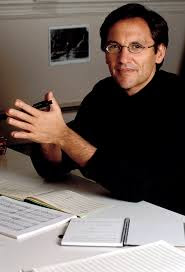
Entrevista con Osvaldo Golijov, compositor argentino autor de Ainadamar, estrenada en verano con éxito para clausurar la temporada del Teatro Real de Madrid. Viernes 6 de julio de 2012.
Nos sentamos en unos espaciosos sillones de unas de las plantas superiores del Real, por donde muy poco tiempo después, circularán los asistentes al Ensayo General de la ópera del maestro Golijov. La sensación de amplitud es enorme y la comodidad del espacio es también psicológica. Nos ofrecen unas aguas minerales para paliar los primeros calores del verano y empezamos.